Plague
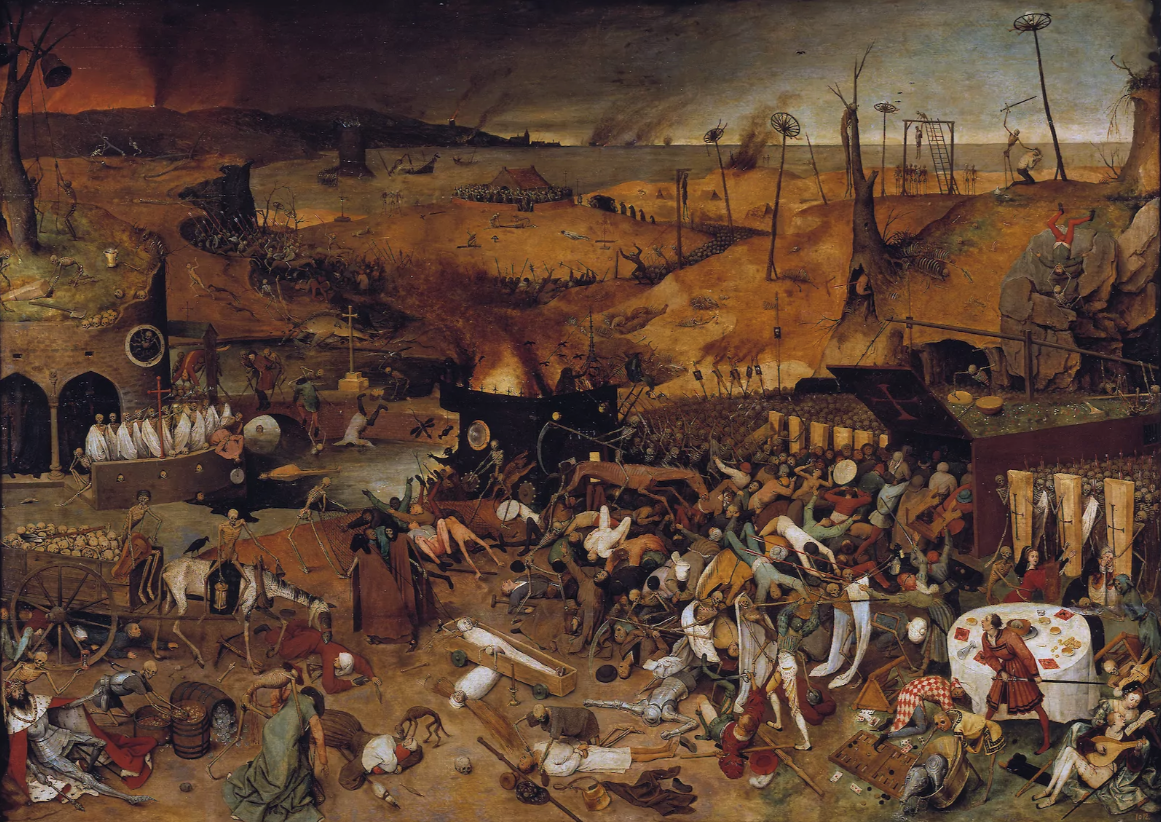
Plague is an infectious disease caused by the bacteria Yersinia pestis, usually found in small mammals and their fleas. It is transmitted between animals through fleas. Humans can be infected through: the bite of infected vector fleas unprotected contact with infectious bodily fluids or contaminated materials the inhalation of respiratory particles from a patient with pneumonic plague. Plague is a very severe disease in people, particularly when the bacteria spreads through the bloodstream (septicaemic plague) or infects the lungs (pneumonic plague). It has a case-fatality ratio of 30% to 100% if left untreated. The pneumonic and septicaemic forms are invariably fatal unless treated early. Pneumonic plague is especially contagious and can trigger severe epidemics through person-to-person transmission via respiratory particles. Historically, plague was responsible for widespread pandemics with high mortality. It was known as the "Black Death" during the fourteenth century, causing more than 50 million deaths in Europe. Nowadays, plague is easily treated with antibiotics and the use of standard precautions to prevent acquiring infection.
Recurrent waves versus a single pandemic
Whether the so-called second pandemic (fourteenth to nineteenth centuries) represents repeated reintroductions from animal reservoirs or a persistent, mutating European focus is an open question in historical epidemiology.
Mortality scale of the Black Death
The commonly cited figure that the Black Death killed a third to half of Europe's population is contested, with regional variation and record quality raising questions about how reliable any continent-wide estimate can be.
Origins of the Justinianic Plague
Whether the sixth-century pandemic attributed to Yersinia pestis originated in Central Asia or East Africa remains disputed among historians and geneticists working from ancient DNA evidence.
Transmission pathways
The relative contribution of flea-borne, airborne (pneumonic), and direct contact transmission in historical outbreaks versus modern cases is disputed and may vary by epidemic.
Virulence and strain evolution
Whether Yersinia pestis has changed in virulence over centuries, or whether differences in historical mortality reflect host and environmental factors instead, is unresolved.
Asymptomatic or mild carriage
The extent to which undetected or mild infections occurred historically and occur today, potentially skewing case fatality estimates, is uncertain.
Antibiotic resistance risk
Whether naturally occurring or engineered antibiotic-resistant strains of Yersinia pestis pose a near-term practical threat is a matter of ongoing scientific debate rather than settled fact.
Antibiotic efficacy and timing
How much treatment outcome depends on the specific antibiotic chosen versus how early it is administered after symptom onset is not fully settled.
Vaccine development status
The degree to which current plague vaccine candidates offer durable, broad protection against both bubonic and pneumonic forms remains an open research question.
Surveillance and underreporting
Whether official case counts in endemic regions understate true incidence due to limited diagnostic infrastructure or underreporting is disputed.
Climate and ecological drivers
How changing climate and land use affect rodent and flea population dynamics, and thus future outbreak risk, is an area of active and unsettled research.
Persistent endemic foci
Which wild rodent populations and geographic regions currently serve as active reservoirs, and how stable those foci are over time, is not fully mapped or agreed upon.
Comparisons to modern pandemics
Whether drawing direct lessons from historical plague outbreaks for modern pandemic preparedness is methodologically sound, given differences in medicine, demographics, and pathogen biology, is debated.
Stigma and historical blame narratives
How accurately popular historical narratives assign blame or causation for plague spread (to particular groups, trade routes, or practices) reflects the evidence versus inherited myth is disputed among historians.
Plague as a bioweapon concern
The degree to which Yersinia pestis represents a realistic bioterrorism threat today, as opposed to a largely historical or theoretical one, is contested among security and public health analysts.